Air sealing
Air Sealing in New York City
Air sealing closes the hidden gaps that let outside air into your home and warm air out. We find the leaks, with a blower door test where we can, and seal them with caulk, canned spray foam or other materials that suit each gap. It can cut drafts and heat loss. Savings vary. Find out why in the seller's fact sheet on R-values. Higher R-values mean greater insulating power.
- Attics, basements and rim joists
- Blower door test where we can
- Gas appliances tested before and after
- Written quote after the assessment
Last reviewed:
Where does air leak in a NYC home?
Most leaks hide where you can't see them. The attic is usually where the biggest ones are (Source: ENERGY STAR, checked Oct 23, 2026). Common spots:
- Attic bypasses: holes for wires, pipes and ducts that run from the rooms below into the attic, plus the open spaces behind kneewalls and above dropped soffits (the boxed-in areas over kitchen cabinets) (Source: ENERGY STAR, checked Oct 23, 2026).
- Recessed lights that open into the attic.
- Chimney and flue chases: the gaps around chimneys and furnace flues. These need heat-resistant materials.
- Rim joists: the wood band where the house sits on its foundation, and between floors (Source: U.S. Department of Energy, checked Oct 23, 2026).
- Plumbing and wiring holes in basements and between floors.
How does a blower door test work?
A blower door is a strong fan set into the frame of an outside door. It pulls air out of the house, which lowers the pressure inside. Outside air then comes in through every gap, so the leaks are easier to find (Source: U.S. Department of Energy, checked Oct 23, 2026).
A calibrated blower door, connected to a pressure gauge, also measures how leaky the house is. That number can be compared before and after the work (Source: U.S. Department of Energy, checked Oct 23, 2026).
An infrared camera helps too. During the test, air leaks show up on its screen as dark streaks.
The process
What does the job look like?
- 1Find the leaks. We look for the gaps, with a blower door test where we can. The test also measures how leaky the house is.
- 2Test gas appliances. Sealing can change how gas appliances vent, so we test gas furnaces, boilers and water heaters for safe venting before we seal, and again after (Source: ENERGY STAR, checked Oct 23, 2026).
- 3Seal. Small gaps and cracks get caulk or canned spray foam, and larger gaps spray foam or fiberglass. We use the foam only to seal gaps; we don't install spray foam insulation. Chimneys and flues get hot, so the gaps around them need heat-resistant materials and some clear space from anything that can burn (Source: ENERGY STAR, checked Oct 23, 2026).
- 4Test at the end. When your scope or a program calls for it, a final blower door test shows how much the leakage went down.
Air sealing is usually done together with attic insulation, as part of the same job. It can also be a job on its own, for example sealing the rim joists in a basement, and then it can take less than a day. Your contract lists the start and finish dates for your house.
Before any work starts, you get a written contract. You can cancel until midnight of the third business day after you sign, and work can't begin until that time has passed (Source: NYC DCWP, checked Nov 5, 2026).
Cold air comes in where the house sits on its foundation.
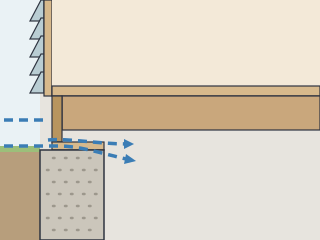 Cold air leaks in at the rim joist.
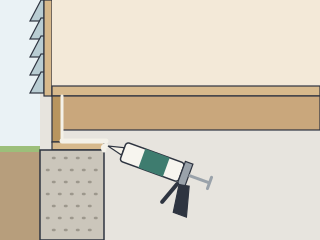 The seams are sealed.
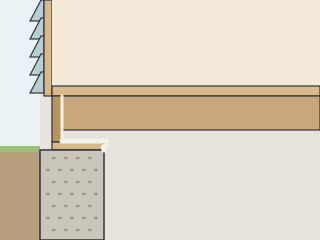 The rim joist is sealed.
How do air sealing and insulation work together?
Insulation slows heat moving through walls and ceilings. Air sealing stops air moving through gaps. Most homes need both, in that order: seal first, then insulate, so the insulation isn't covering open holes (Source: U.S. Department of Energy, checked Oct 23, 2026).
Dense-pack wall insulation also seals some air inside the walls, but it doesn't reach leaks at the rim joists or between floors (Source: U.S. Department of Energy, checked Oct 23, 2026). That's why air sealing is its own step.
What does air sealing cost?
We give you a written quote after the assessment. The price depends on how many leaks your home has, where they are, and how hard they are to reach.
You never pay for work you didn't agree to in writing.
Questions about air sealing
What is air sealing?
Air sealing closes the gaps that let air leak in and out of your house: around pipes, wires, chimneys and recessed lights, behind kneewalls, and where the house meets its foundation. Small gaps get caulk or canned spray foam, and larger gaps spray foam or fiberglass. Chimneys and flues get hot, so the gaps around them need heat-resistant materials (Source: ENERGY STAR, checked Oct 23, 2026). We use the foam only to seal gaps, not as insulation.
Can a house be sealed too tight?
A house needs fresh air, and gas appliances need to vent safely. Sealing can change how a furnace, boiler or water heater vents, so we test these appliances for safe venting before and after we seal (Source: ENERGY STAR, checked Oct 23, 2026). If a home ends up needing more fresh air, the usual fix is a ventilation fan.
Why seal the attic before adding insulation?
Insulation slows heat, but air still flows through gaps around pipes, wires, chimneys and lights. Sealing those gaps first stops the air, so the insulation on top can do its job (Source: U.S. Department of Energy, checked Oct 23, 2026). It's much harder to seal later, once insulation covers the attic floor.
What does an infrared camera show?
It shows the surface temperature of walls and ceilings as an image. Cold patches can mean missing insulation. During a blower door test, air leaks show up as dark streaks (Source: U.S. Department of Energy, checked Oct 23, 2026). It shows where to look; it doesn't see inside the wall.
How long does the job take?
It depends on the house and the work. A home assessment usually takes 1–1.5 hours. Most wall jobs take up to 2 days, and most attic jobs 1 day. Air sealing is usually done as part of the attic job. On its own, for example at the rim joists in a basement, it can take less than a day. Your contract lists the start and finish dates for your job.
Is it messy, and do I need to leave?
There's some dust, but we keep it under control: we protect the work area and clean up at the end of the job. You can usually stay home while we work. Before the job, we agree with you on which rooms we need to get into, and when.
See all our answers, or learn how to check any contractor before you hire one.
Sources
Where the facts on this page come from, and when we last checked them.
- Attic Air Sealing Project, ENERGY STAR. Checked October 23, 2026.
- Insulation and Air-Sealing Essentials, U.S. Department of Energy. Checked October 23, 2026.
- Home Energy Assessments, U.S. Department of Energy. Checked October 23, 2026.
- Inspection Checklist: Home Improvement Contractors, NYC DCWP. Checked November 5, 2026.
- Blown Insulation in Existing Attics, U.S. Department of Energy. Checked October 23, 2026.
Book a home assessment
We look at your home and give you a written scope and quote.
Call929-401-8115Book a free assessmentFind out where your home leaks
Book a home assessment. We'll look for the leaks and show you where the air gets in.