Attic insulation
Attic Insulation in New York City
Attic insulation keeps heat in your living space instead of letting it escape through the roof. We seal the air leaks in the attic floor first, then blow in insulation, usually cellulose, to the depth your home needs. In flat-roof row houses, the cockloft under the roof can often be insulated too. Savings vary. Find out why in the seller's fact sheet on R-values. Higher R-values mean greater insulating power.
- Attic floors, kneewalls and cocklofts
- Air leaks sealed first
- Baffles keep the vents open
- Written quote after the assessment
Last reviewed:
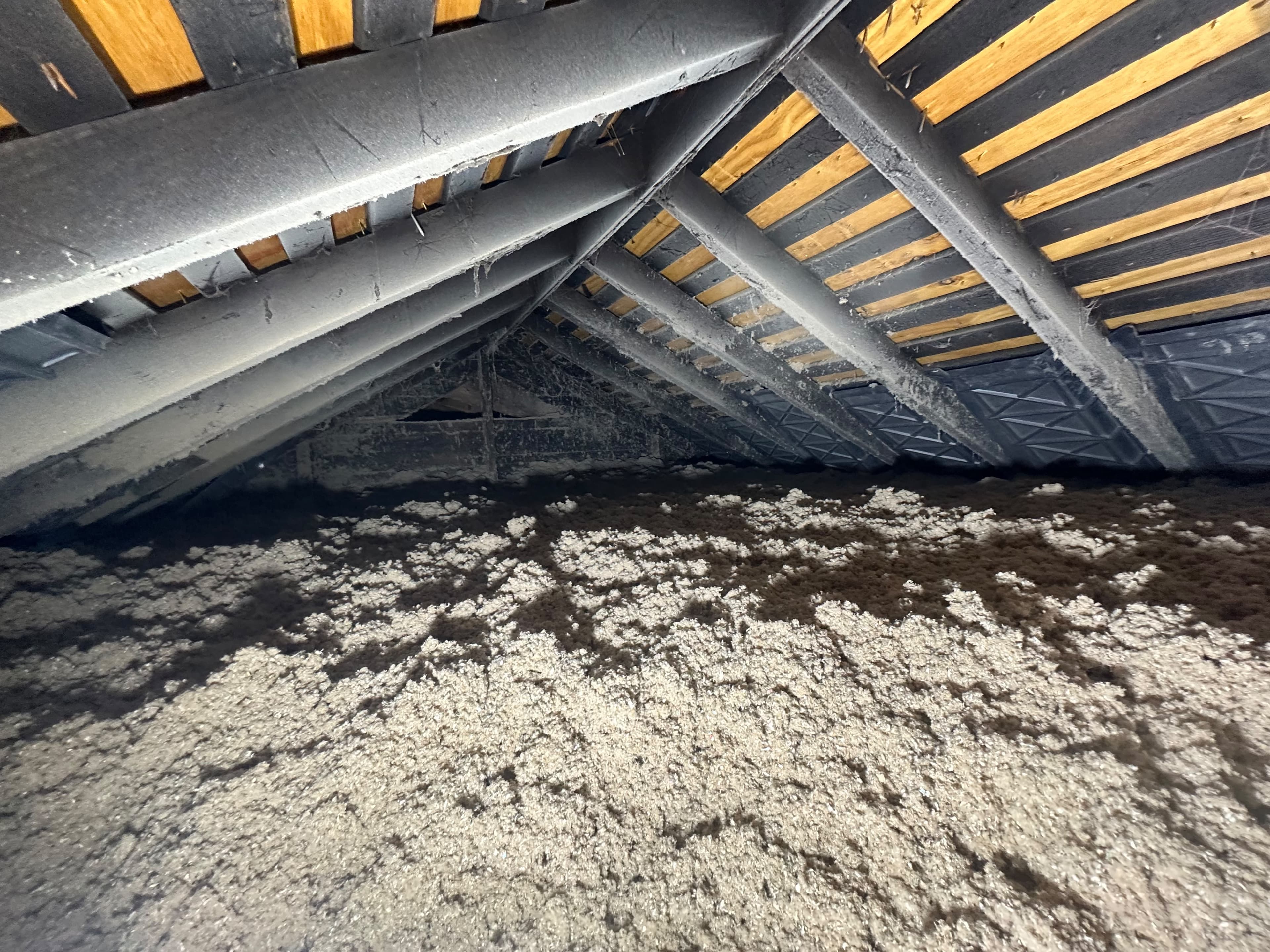
Is attic insulation right for my house?
It's worth checking if your attic has little or no insulation, which is common in older homes (Source: U.S. Department of Energy, checked Oct 23, 2026), or if your top floor is hot in summer and cold in winter.
Attic floors, kneewalls and cocklofts
- Attic floors. In a house with a walk-up or crawl-in attic, insulation goes on the attic floor, over the ceiling of the rooms below.
- Kneewalls. These are the short walls on a top floor with sloped ceilings. The spaces behind and under them are a common source of air leaks (Source: ENERGY STAR, checked Oct 23, 2026).
- Cocklofts. Many NYC row houses have a flat roof with a low, closed space between the top-floor ceiling and the roof. That's the cockloft. We reach it from inside the house, not through the roof, and blow the insulation in.
Problems to fix first
These need to be taken care of before any insulation goes in (Source: ENERGY STAR, checked Oct 23, 2026):
- Roof leaks and wet insulation.
- Mold or rot on rafters or joists, a sign of moisture problems.
- Kitchen, bathroom or dryer vents that blow moist air into the attic instead of outdoors.
- Little or no attic ventilation.
- Old knob-and-tube wiring, which can be a fire hazard in contact with insulation.
Vermiculite is an old loose-fill insulation: pebble-like and usually gray-brown or silver-gold. It may contain asbestos, so it shouldn't be disturbed (Source: U.S. EPA, checked Oct 24, 2026). If we find it, we don't touch it, and the work waits until a professional asbestos contractor has dealt with it.
The process
What does the job look like?
Here's a typical attic job. Your written scope spells out the details for your house.
- 1Check and protect. We check the attic for leaks, old wiring, moisture and mold. We look for vermiculite and other materials that may contain asbestos, and we leave them alone. Then we protect the work area.
- 2Remove old insulation, if needed. Where your scope calls for it, we take out the old insulation first.
- 3Seal first. We seal the gaps around pipes, wires, chimneys, recessed lights and other openings into the rooms below. Insulation goes on after the attic floor is sealed (Source: U.S. Department of Energy, checked Oct 23, 2026).
- 4Keep the vents open. We put baffles, simple channels, at the attic vents, so the insulation doesn't block them (Source: U.S. Department of Energy, checked Oct 23, 2026).
- 5Blow in the insulation. A hose carries the insulation, usually cellulose, from a blowing machine into the attic, where it's spread to an even depth.
- 6Cleanup. We clean up at the end of the job.
Most attic jobs take 1 day, and the air sealing is usually done during the same job. Your contract lists the start and finish dates for your house.
Before any work starts, you get a written contract. You can cancel until midnight of the third business day after you sign, and work can't begin until that time has passed (Source: NYC DCWP, checked Nov 5, 2026).
Warm air rises. With only a thin layer of insulation, heat escapes through the attic floor.
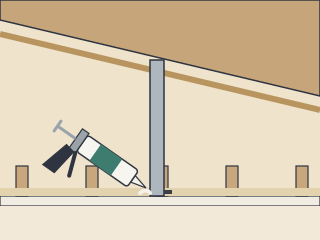 Gaps around pipes and wires are sealed.
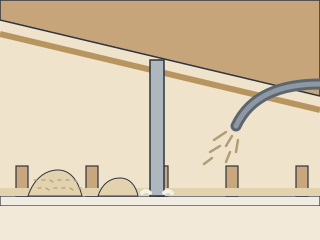 Insulation is blown onto the attic floor.
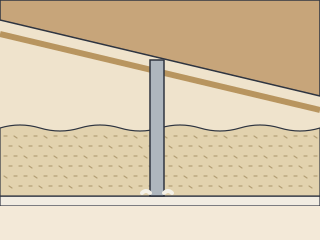 It's spread to an even depth.
Materials and R-values
R-value measures how well insulation slows the flow of heat. The higher the number, the better it insulates (Source: ENERGY STAR, checked Oct 23, 2026).
New York City uses climate zone 4A for its energy code (Source: NYC Buildings, checked Oct 23, 2026). ENERGY STAR publishes how much attic insulation it recommends for that zone (Source: ENERGY STAR, checked Oct 23, 2026). Your written scope shows the R-value we plan for your attic.
We mostly use blown cellulose, and sometimes fiberglass. Cellulose is made from recycled paper treated to resist fire, mold and pests; fiberglass is made from glass fibers and doesn't burn (Source: U.S. Department of Energy, checked Oct 23, 2026). Either one has to stay dry and be kept away from chimneys and metal flues.
In tight spaces like cocklofts and kneewalls, the depth of the space sets the limit, so we fill what's there.
What does attic insulation cost?
We give you a written quote after the assessment. The price depends on the size of the attic or cockloft, how we reach it, the amount of air sealing it needs, and any problems that have to be fixed first.
You never pay for work you didn't agree to in writing.
Questions about attic insulation
What is a cockloft, and can you insulate it?
A cockloft is the low, closed space between the top-floor ceiling and the flat roof of many NYC row houses. It's hard to reach, but insulation can often be blown into it through a few openings. We reach it from inside the house, not through the roof. The assessment shows whether yours can be insulated.
Why seal the attic before adding insulation?
Insulation slows heat, but air still flows through gaps around pipes, wires, chimneys and lights. Sealing those gaps first stops the air, so the insulation on top can do its job (Source: U.S. Department of Energy, checked Oct 23, 2026). It's much harder to seal later, once insulation covers the attic floor.
Will insulation block my attic vents?
It shouldn't. In a vented attic, we put in baffles first: simple channels that keep insulation away from the vents, so air can still move under the roof (Source: U.S. Department of Energy, checked Oct 23, 2026).
Is blown-in insulation safe?
Installed correctly, it's a well-established material for homes. Cellulose is treated to resist fire, mold and pests, and fiberglass doesn't burn (Source: U.S. Department of Energy, checked Oct 23, 2026). The rules that matter: keep it dry, and keep it away from chimneys, metal flues and old knob-and-tube wiring. That's why we look for moisture, old wiring and materials that may contain asbestos before any work. A look can't tell whether something contains asbestos (Source: U.S. EPA, checked Oct 27, 2026), so we don't touch anything that might.
Should I choose cellulose or fiberglass?
Both work well when they're dense-packed (Source: U.S. Department of Energy, checked Oct 23, 2026). We mostly use dense-pack cellulose, and sometimes fiberglass. Cellulose is made mostly from recycled paper and is common in upgrades of existing homes. Fiberglass makes little dust while it's installed and doesn't burn (Source: U.S. Department of Energy, checked Oct 23, 2026). Your contract names the material for your house (Source: NYC DCWP, checked Nov 5, 2026).
What work don't you do?
We insulate homes, seal air leaks and do home energy assessments. We don't remove asbestos, mold or lead paint, repair electrical wiring or install spray foam insulation. If we find asbestos, mold or wiring problems, we don't touch them, and the work waits until a qualified professional has checked or fixed them.
How long does the job take?
It depends on the house and the work. A home assessment usually takes 1–1.5 hours. Most wall jobs take up to 2 days, and most attic jobs 1 day. Air sealing is usually done as part of the attic job. On its own, for example at the rim joists in a basement, it can take less than a day. Your contract lists the start and finish dates for your job.
See all our answers, or learn how to check any contractor before you hire one.
Sources
Where the facts on this page come from, and when we last checked them.
- Blown Insulation in Existing Attics, U.S. Department of Energy. Checked October 23, 2026.
- Attic Air Sealing Project, ENERGY STAR. Checked October 23, 2026.
- Protect Your Family from Asbestos-Contaminated Vermiculite Insulation, U.S. EPA. Checked October 24, 2026.
- Inspection Checklist: Home Improvement Contractors, NYC DCWP. Checked November 5, 2026.
- Recommended Home Insulation R-Values, ENERGY STAR. Checked October 23, 2026.
- 2025 NYC Energy Conservation Code, Chapter R3, NYC Buildings. Checked October 23, 2026.
- Energy Renovations: Insulation, U.S. Department of Energy. Checked October 23, 2026.
- Protect Your Family from Exposures to Asbestos, U.S. EPA. Checked October 27, 2026.
- Measure Guideline: Wall Air Sealing and Insulation Methods in Existing Homes, U.S. Department of Energy. Checked October 23, 2026.
Book a home assessment
We look at your home and give you a written scope and quote.
Call929-401-8115Book a free assessmentFind out what your attic needs
Book a home assessment. We'll check your attic's insulation and air leaks, and give you a written scope and quote.