Wall insulation
Wall Insulation in New York City
Drill-and-fill insulation adds insulation to the walls you already have, without tearing them open. We drill a small hole into each wall cavity, blow in dense-packed insulation, usually cellulose, until it's full, and close the hole. It can cut drafts and reduce heat loss. Savings vary. Find out why in the seller's fact sheet on R-values. Higher R-values mean greater insulating power.
- Drill-and-fill
- Dense-pack cellulose or fiberglass
- Small holes, closed afterward
- Written quote after the assessment
Last reviewed:
Is wall insulation right for my house?
It usually suits wood-frame houses with siding. Their walls have hollow spaces between the studs, called cavities, and those spaces can be filled from outside or inside.
When it may not be a fit
- Solid brick walls. Some brick houses have solid masonry walls with no hollow space to fill. Others have a framed wall behind the brick, which is usually easier to insulate from inside (Source: U.S. Department of Energy, checked Oct 23, 2026).
- Live knob-and-tube wiring. This old wiring, found in houses wired before about 1930, shouldn't be covered with insulation (Source: ENERGY STAR, checked Oct 23, 2026). Those walls can be insulated after an electrician replaces it.
- Wet or damaged walls. Leaks and damage need to be fixed first. Insulation has to stay dry.
- Walls that are already full. If the cavities already have insulation, adding more won't help much. The assessment checks what's inside your walls.
- Asbestos. If a wall or its siding may contain asbestos, we don't drill it unless a certified asbestos inspector has tested it and found none.
If drill-and-fill isn't right for your walls, we'll say so. Attic insulation and air sealing may help more.
The process
What does the job look like?
Here's a typical job. Your written scope spells out the details for your house before you sign anything.
- 1Safety check. We look for old wiring, leaks, moisture, mold and materials that may contain asbestos, and confirm which walls are hollow. A look can't tell whether something contains asbestos (Source: U.S. EPA, checked Oct 27, 2026), so we don't touch anything that might. Other problems wait until a qualified professional has checked or fixed them.
- 2Protection. We protect the work area and keep the dust under control.
- 3Drilling. Which side we drill from depends on how the wall is built, its outside finish and safe access. On wood-frame houses with siding, we usually work from outside: a few pieces of siding are lifted or removed, and we drill through the boards behind them. Brick and stucco walls are done from inside (Source: U.S. Department of Energy, checked Oct 23, 2026).
- 4Filling. A hose goes into each hole, and insulation is blown in until the cavity is packed full. Packing it tight keeps it from settling and slows air leaks (Source: U.S. Department of Energy, checked Oct 23, 2026).
- 5Closing the holes. Outside, the holes are under the siding, so they don't show once it's back on. Inside, each hole is closed and skim-coated (covered with a thin, smooth layer of filler), ready for paint. We don't paint.
- 6Cleanup. We clean up at the end of the job.
Most wall jobs take up to 2 days. Your contract lists the start and finish dates for your house.
Before any work starts, you get a written contract. You can cancel until midnight of the third business day after you sign, and work can't begin until that time has passed (Source: NYC DCWP, checked Nov 5, 2026).
Hollow walls with no insulation let heat escape.
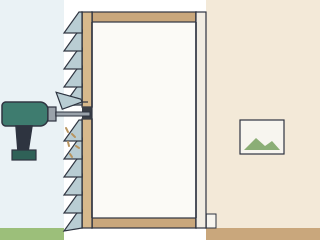 A piece of siding is lifted, and a small hole is drilled.
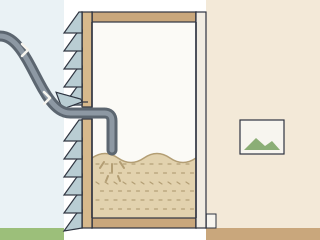 Insulation is blown in until the wall is packed full.
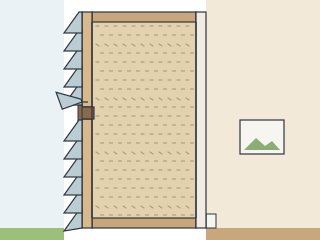 The hole is closed with a plug.
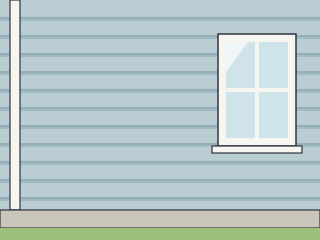 The siding goes back on. Nothing shows.
From outside
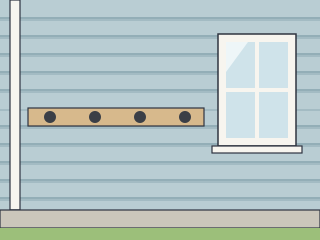 A row of holes, one in each wall cavity, under a lifted row of siding.
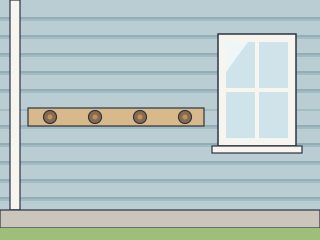 Each hole is closed with a plug.
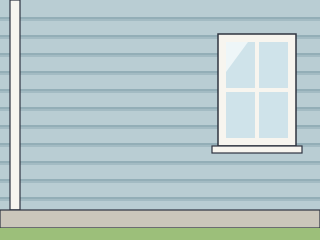 The siding goes back on. Nothing shows.
From inside
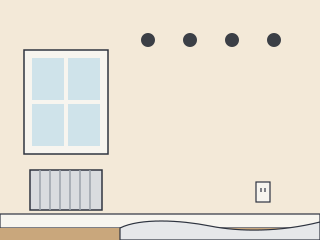 Brick and stucco walls are drilled from inside.
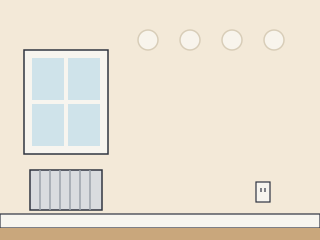 Each hole is closed and skim-coated, ready for paint.
Materials and R-values
R-value measures how well insulation slows the flow of heat. The higher the number, the better it insulates (Source: ENERGY STAR, checked Oct 23, 2026).
Dense-pack cellulose or fiberglass
We mostly use dense-pack cellulose, and sometimes fiberglass.
Cellulose is made from recycled paper that's treated to resist fire, mold and pests. Fiberglass is made from glass fibers and doesn't burn (Source: U.S. Department of Energy, checked Oct 23, 2026). Both can be blown into closed walls.
Dense-pack means the insulation is blown in tight, so it fills the whole cavity and doesn't settle. Packed this way, it also slows air leaks inside the wall (Source: U.S. Department of Energy, checked Oct 23, 2026).
What R-value will my walls get?
The depth of the wall sets the limit, because insulation can only fill the space that's there. Your written scope shows the R-value we plan for your walls.
New York City uses climate zone 4A for its energy code (Source: NYC Buildings, checked Oct 23, 2026). If you're replacing your siding anyway, ENERGY STAR's advice for that zone is to fill empty wall cavities before the new siding goes on, and to add insulating sheathing under it (Source: ENERGY STAR, checked Oct 23, 2026).
What does wall insulation cost?
We give you a written quote after the assessment. The price depends on how many walls need filling, how we reach them, the material, and any repairs that have to come first, such as old wiring or leaks.
Every house is different, so the quote comes after we've seen yours. You never pay for work you didn't agree to in writing.
Questions about wall insulation
How does drill-and-fill wall insulation work?
We drill a small hole into each wall cavity, the hollow space between two studs, from outside or inside. A hose then blows insulation, usually cellulose, into the cavity until it's packed full, and the hole is closed.
The U.S. Department of Energy calls drill-and-fill a common way to insulate the walls of older homes (Source: U.S. Department of Energy, checked Oct 23, 2026).
Do you drill from the outside or the inside?
It depends on the wall: how it's built, its outside finish, safe access, and whether it may contain asbestos. On wood-frame houses with siding, we usually drill from outside, after a few pieces of siding are lifted or removed. Brick and stucco walls are done from inside (Source: U.S. Department of Energy, checked Oct 23, 2026). You'll know which before you sign anything.
Do you remove drywall or plaster?
No. Drill-and-fill goes in through small holes, so your drywall or plaster stays in place. If we work from inside, each wall gets a row of small holes, which we close and skim-coat so they're ready for paint. We don't paint.
How are the holes patched?
Outside, we drill under the siding, so the holes don't show once the siding is back in place. Inside, each hole is closed and skim-coated, which means covered with a thin, smooth layer of filler, so it's ready for paint. We don't paint, so plan for painting after the job.
Is it messy, and do I need to leave?
There's some dust, but we keep it under control: we protect the work area and clean up at the end of the job. You can usually stay home while we work. Before the job, we agree with you on which rooms we need to get into, and when.
Can you insulate a brick row house?
Sometimes. Some brick row houses have solid masonry walls with no hollow space to fill. Others have a framed wall behind the brick, which can often be insulated from inside (Source: U.S. Department of Energy, checked Oct 23, 2026). In row houses, insulating the attic or cockloft and sealing air leaks may help more. The assessment shows which kind of wall you have.
What if my house has old knob-and-tube wiring?
Old knob-and-tube wiring, found in houses wired before about 1930, can be a fire hazard in contact with insulation (Source: ENERGY STAR, checked Oct 23, 2026). Walls with live knob-and-tube wiring shouldn't be insulated until an electrician replaces it (Source: U.S. Department of Energy, checked Oct 23, 2026). We check for it before any work, and those walls wait until the wiring is replaced.
What work don't you do?
We insulate homes, seal air leaks and do home energy assessments. We don't remove asbestos, mold or lead paint, repair electrical wiring or install spray foam insulation. If we find asbestos, mold or wiring problems, we don't touch them, and the work waits until a qualified professional has checked or fixed them.
See all our answers, or learn how to check any contractor before you hire one.
Sources
Where the facts on this page come from, and when we last checked them.
- Measure Guideline: Wall Air Sealing and Insulation Methods in Existing Homes, U.S. Department of Energy. Checked October 23, 2026.
- Attic Air Sealing Project, ENERGY STAR. Checked October 23, 2026.
- Protect Your Family from Exposures to Asbestos, U.S. EPA. Checked October 27, 2026.
- Inspection Checklist: Home Improvement Contractors, NYC DCWP. Checked November 5, 2026.
- Recommended Home Insulation R-Values, ENERGY STAR. Checked October 23, 2026.
- Energy Renovations: Insulation, U.S. Department of Energy. Checked October 23, 2026.
- 2025 NYC Energy Conservation Code, Chapter R3, NYC Buildings. Checked October 23, 2026.
- Insulation and Air-Sealing Essentials, U.S. Department of Energy. Checked October 23, 2026.
Book a home assessment
We look at your home and give you a written scope and quote.
Call929-401-8115Book a free assessmentFind out if your walls can be insulated
Book a home assessment. We'll check what's inside your walls and give you a written scope and quote.